
May, 2026
Jason Never Expected Cancer. Hours Later, Everything Changed.
Jason didn’t expect his life to change in a single morning.
That’s exactly what happened when, at just 52, he was diagnosed with Acute Lymphoblastic Leukaemia, an aggressive form of bone marrow cancer. It was a diagnosis that would throw his life into chaos and see him spending the next 12-months in constant reliance on medical treatment.
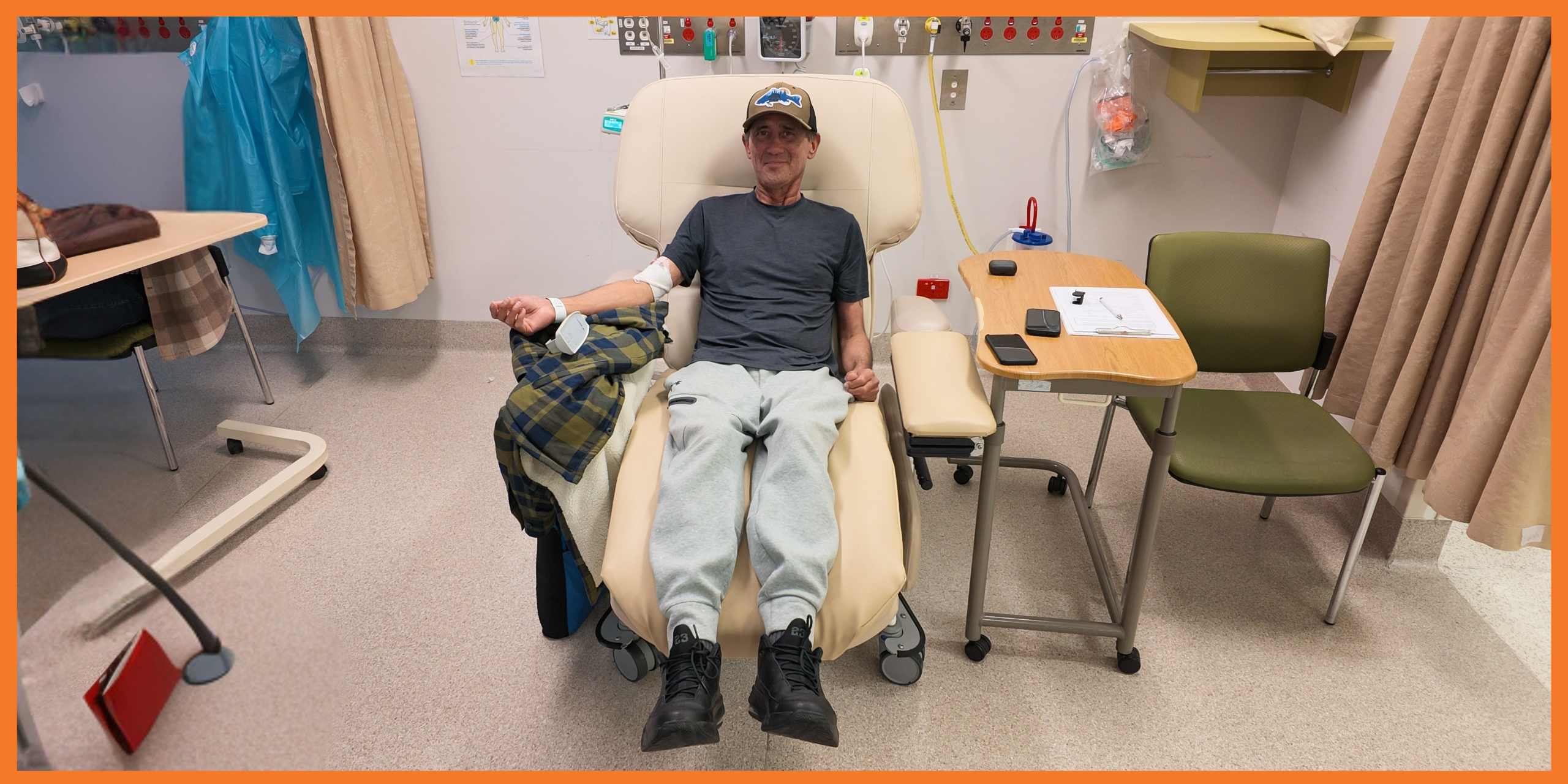
Jason during one of his regular treatment sessions at Gold Coast University Hospital — part of the ongoing care he continues to rely on.
Just weeks earlier, life had felt steady. He had a young family, a physical job, and a routine that kept everything moving forward. He was happy, enjoying his life with his family and working as a painter and plasterer locally on the Gold Coast. Things were good.
There was nothing to suggest what was coming.
Then, gradually, something shifted. Jason started feeling run down. More tired than usual. Exhausted in a way that didn’t quite make sense. He couldn’t shake it, nothing was helping.
Like most people, he looked for simple answers.
“I thought it might’ve been something like diabetes,” Jason said. “You don’t think cancer straight away.”
He went for a blood test. That is when his worst fear was realised, the news that would change everything.
After receiving the results, Jason was called back to his doctor urgently. By early that afternoon he was admitted to hospital.
“I was at the doctor at 10am,” he said. “By about 1pm, I was in hospital.”
Jason had no time to prepare, no time to process what this would mean for him or his family. His treatment needs were urgent. He had to get immediate care, and that meant leaving his young children and partner behind.
“Basically, I was told to pack my bags,” he said. “It was scary, I didn’t know what to think. It was all happening so fast.”
Within hours, he was undergoing tests, receiving IV fluids, and beginning what would become an intensive and ongoing course of treatment.
“It was a shock… but I didn’t really have time to think about it,” he said.
Then came chemotherapy. It was relentless. Long days, constant fatigue, and a level of exhaustion that made it hard to do anything except sleep.
“I was more exhausted than I’d ever been,” he said. “Days felt a bit shorter because I was sleeping most of the time, but it takes a toll on you.”
“All I could do was wake up, eat, go back to sleep. My body was fighting so hard, and everything was taking a toll.”
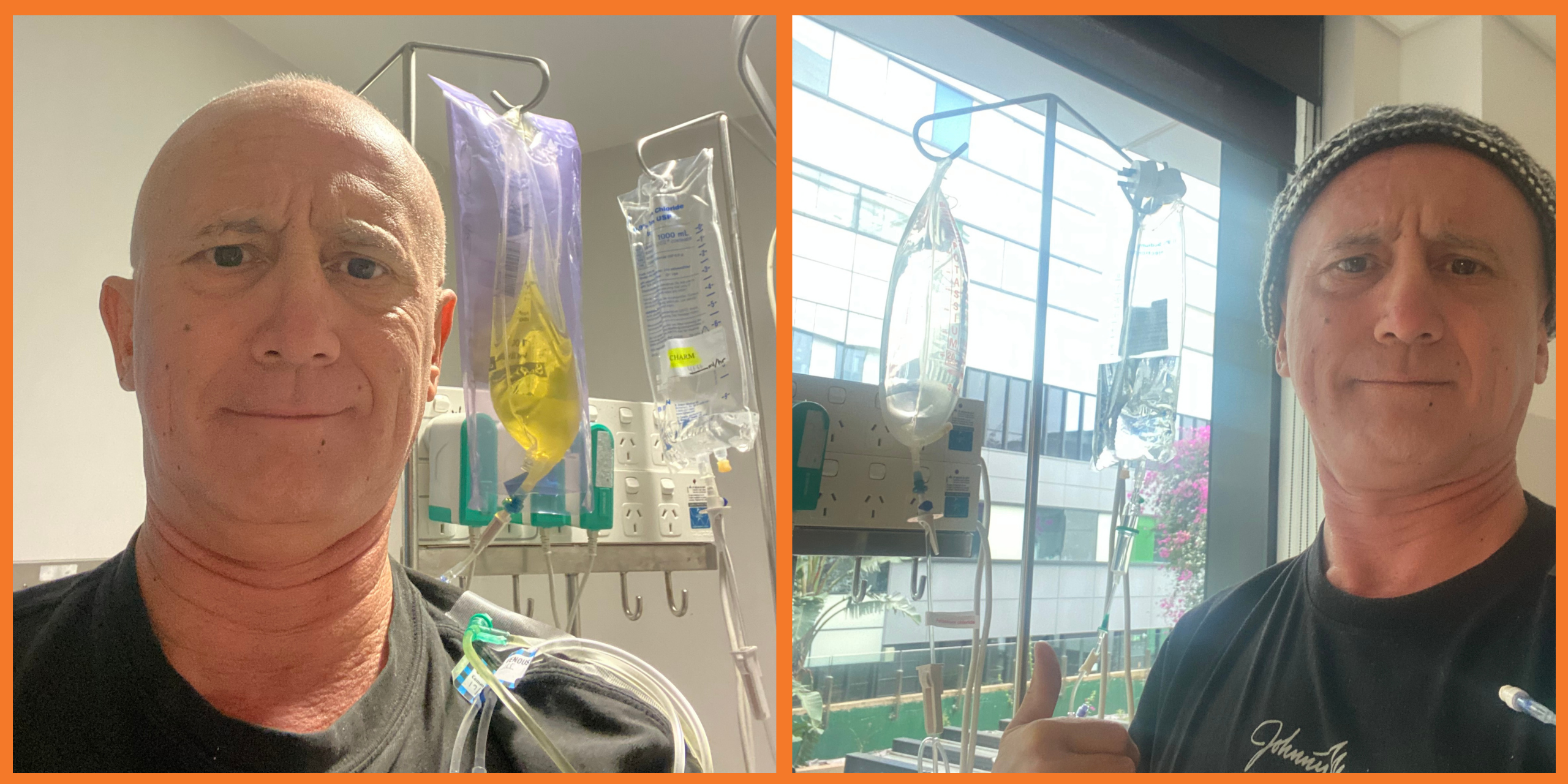
This was Jason’s reality for months – long days attached to machines as chemotherapy took its toll.
DONATE NOW
What followed was months of treatment, moving in and out of hospital, before he was transferred to Brisbane for a critical bone marrow transplant.
He would spend more than three months away from home. Away from his partner. Away from his kids. Away from the life he had built.
Even then, the journey didn’t end.
Complications, infections and ongoing treatment meant repeated hospital admissions, extended time on antibiotics, and the constant risk of setbacks.
“A lot of the complications I’ve had were life-threatening,” Jason said. “I’ve had bowel problems, stomach problems, lung problems… it can just pop up anywhere.”
Jason was discharged from a Brisbane Hospital on Boxing Day last year and was finally back on the Gold Coast.
He began attending treatment at Gold Coast University Hospital at least twice a week for regular haematology appointments, requiring platelet infusions, further treatments and monitoring.
This quickly became difficult. With school aged children, Jason faced an issue many cancer patients do – how do I get to and from appointments? It’s a barrier that can determine whether treatment can continue.
Initially, Jason relied on his partner, friends and family to get him from Pimpama to the hospital, but that support, while invaluable, wasn’t something he could depend on long term. The cost of taxis and Ubers was a financial strain they couldn’t take, since Jason had been unable to work.
“I’ve got a 12-year-old and a five-year-old,” he said. “My partner works four days a week. It’s just hard.”
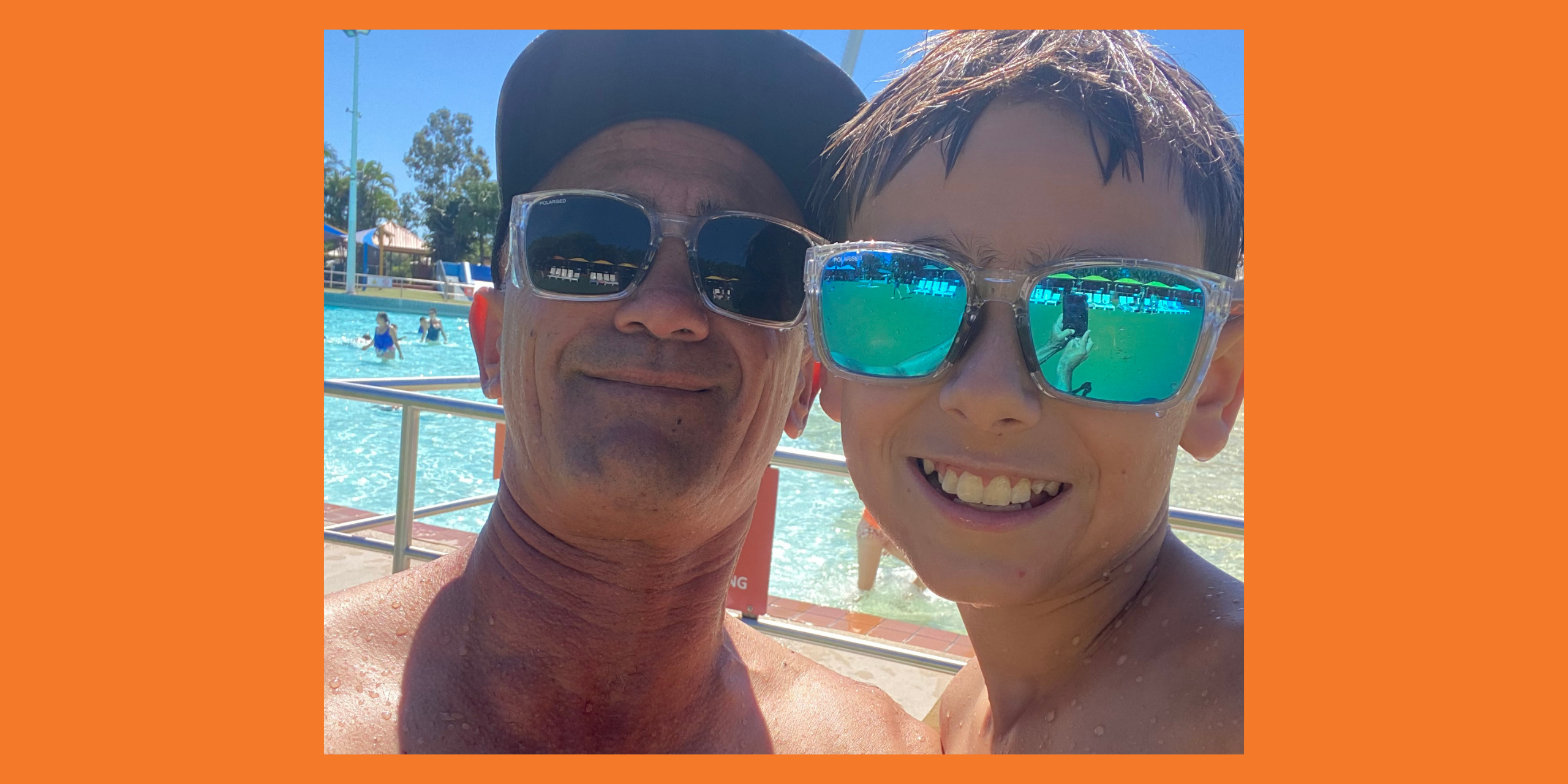
Jason and his 12-year-old son, Hunter, enjoying life before his diagnosis.
DONATE NOW
“Public transport wasn’t practical as I was prone to infection and would feel exhausted. My body is still fighting and the taxis and rideshare added up quickly.”
“That’s $15 just to get to the train station,” Jason said. “Then the train, then $15 to get home. It adds up.”
Through a hospital social worker, Jason was introduced to support that would fundamentally help him and his family – Gold Coast Hospital Foundation’s Cancer Patient Transport Service.
Since then, it has become an invaluable and crucial part of his routine.
While his partner still helps where she can, Jason now relies on the service to get home from treatment twice a week, something that has made a significant difference to his day-to-day life.
“At least you know how you’re getting home,” he said. “You’ve got clarity.”
And in the context of everything else he’s dealing with, that clarity matters.
“You’re already dealing with cancer, that’s stress enough on its own,” Jason said. “You don’t need the extra pressure of working out how you’re going to get home from treatment.”
Without that support, the impact reaches far beyond the hospital.
“Everything gets pushed back when I need to be picked up,” he said. “Dinner, routines, the kids… traffic just makes it worse. It’s just extra strain my family doesn’t need.”
For Jason, the service isn’t just helpful, it is a lifeline that makes ongoing treatment accessible. It relieves an incredible burden on his family, and he is forever grateful for the support he has received.
“I cannot tell you how much this service has meant to me and my family. I am so grateful to the community for their donations and to the Gold Coast Hospital Foundation for making this service available to people like me,” he said.
Looking ahead, Jason’s recovery is still ongoing, a process expected to take one to two years as his body continues to respond to treatment.
But through it all, one thing has become clear.
“No one expects to end up with cancer,” he said. “But it can happen to anyone.”
Despite all the hardship, Jason is taking small wins wherever he can.
“There was a stage I was on 24 pills in the morning and 11 at night,” he said. “Now it’s about 11 in the morning and four at night.”
Jason continues to rely on the Cancer Patient Transport Service for the foreseeable future. To those who make that possible, he feels nothing but gratitude.
“You’re doing a great thing for the community,” he said. “It makes a massive difference to people who need help getting through it.”
Across the Gold Coast, patients like Jason rely on the Cancer Patient Transport Service daily to reach the life-saving treatment they cannot afford to miss.
Donate today and help give patients like Jason the chance to keep getting to the treatment they rely on and continue living their lives.